
How BCN Digital Expanded Its Cable TV Network Across Andhra Pradesh and Telangana
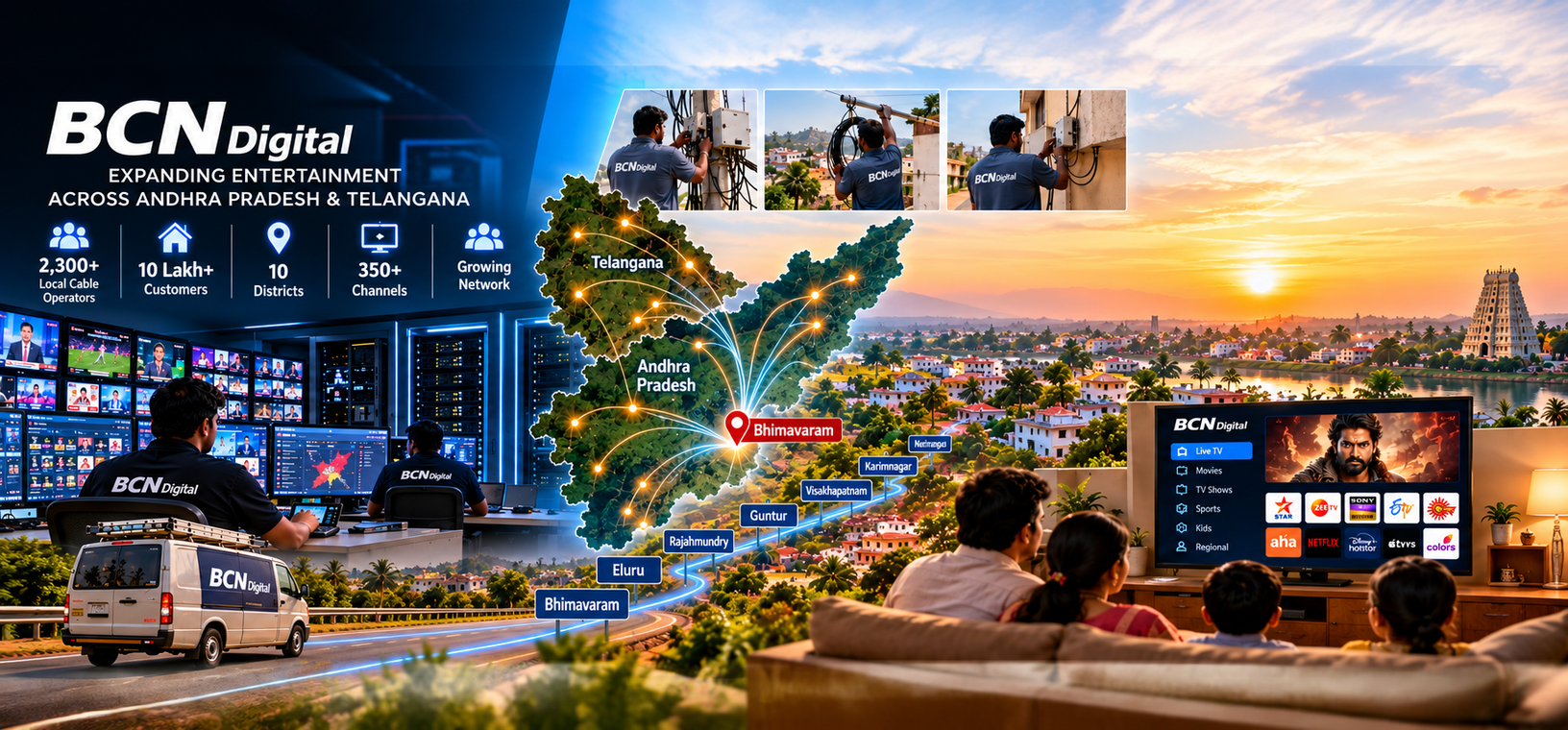
Discover how BCN Digital developed its regional cable television network through local cable operator partnerships, wider geographical coverage, customer connections and regional programming across Andhra Pradesh and Telangana.
How BCN Digital Expanded Its Cable TV Network Across Andhra Pradesh and Telangana
Introduction
Expanding a cable television network involves more than extending cables from one town to another. It requires local partnerships, reliable signal distribution, technical coordination and an understanding of what customers expect from their television service.
BCN Digital's published history describes its development from a cable signal provider in Bhimavaram into a broader regional operation serving multiple districts. Its network model, which includes local cable operators, illustrates how a regional television business can extend its reach while maintaining connections with local communities.
This article examines the network expansion process, the role of local operators, service delivery challenges and the importance of regional content in the cable television industry.
From Local Coverage to a Wider Regional Network
The official history of The Bhimavaram Community Network states that M. R. Gopala Raju established the business in 1991 to provide cable television signals to operators in Bhimavaram, Andhra Pradesh. The network subsequently expanded into nearby villages and towns. Source: BCN Digital's official website
This local foundation was important because cable television distribution depends on reaching individual households through a workable service network. As demand increases, providers need to develop their infrastructure and relationships beyond their original service area.
Expansion into additional locations can introduce new operational requirements. Every town or village has its own customer base, local infrastructure conditions and service expectations. A network must account for these differences when planning coverage and supporting connections.
For a regional cable business, growth therefore involves two connected activities: extending the distribution network and building the local relationships needed to operate it effectively.
The Importance of Local Cable Operators
Local cable operators (LCOs) play an important role in India's cable television ecosystem. They often maintain direct relationships with households and understand the service requirements of their respective localities.
In a multi-location network, the central distribution business and local operators have different but connected responsibilities.
Local operators may support activities such as:
Connecting households to the cable network.
Coordinating installation appointments and customer requests.
Identifying signal or equipment problems at customer premises.
Communicating service updates and package information.
Helping customers resolve routine service issues.
The wider network operator, meanwhile, needs to coordinate signal distribution, channel availability, technical systems and relationships with its operator network.
This structure can help a business serve locations where direct management of every household would be difficult. Local knowledge supports customer service, while central coordination helps maintain consistency across the wider network.
However, the model works best when responsibilities are clear and technical issues can be escalated quickly.
BCN Digital's Network and Customer Reach
BCN Digital's official website reports a network of more than 2,300 sub-operators and nearly 10 lakh customers across 10 districts in Andhra Pradesh and Telangana. The same page says the business was continuing to expand into additional districts. These are figures reported on the company's website and should be treated as published company claims rather than independently audited statistics. Source: BCN Digital
These figures help illustrate the scale of coordination required in a regional cable operation. A network involving thousands of local operators must support communication between the central business, local service providers and customers.
The number of connected customers is only one measure of network reach. Operational effectiveness also depends on the quality of service delivery, the ability to address interruptions and the consistency of support across different locations.
As coverage increases, businesses must consider whether their technical infrastructure and support processes can accommodate additional customers without creating unnecessary service delays.
Managing Expansion Across Different Districts
Extending a cable network into new districts requires careful planning. The approach that works in one town may not be suitable for every location, especially when infrastructure availability and local operating conditions differ.
Several factors can influence regional expansion.
Infrastructure readiness: Network planning must consider signal distribution requirements, available infrastructure, equipment and the connections needed to reach local operators.
Local partnerships: Establishing relationships with operators who understand the area can help a network organise installations, customer communication and routine service activities.
Technical support: As the number of locations increases, providers need a clear process for identifying problems, assigning responsibility and resolving technical issues.
Operational coordination: Information about channel changes, service updates, equipment requirements and customer issues must reach the relevant teams and local operators.
Customer experience: Expansion should not be measured only by the number of new connections. Service reliability and the ability to respond to customers also matter.
These considerations apply broadly to regional cable television businesses. They explain why geographical expansion requires both infrastructure and an organised operating model.
Maintaining Service Quality as the Network Grows
A larger network creates opportunities to reach more households, but it can also make service management more demanding. Technical problems may occur at different points in the distribution chain, and delays in identifying the source can affect the time needed to restore service.
Clear communication between the central network team and local operators is therefore important. Operators need to know how to report faults, whom to contact and how to communicate service information to customers.
Equipment management is another consideration. Compatible devices, correct installation and appropriate technical support help customers access the services available through their connection.
Network growth also makes consistency important. Customers in different locations should receive clear information about available packages, installation processes and support channels. For regional providers, these operational practices help turn a wide service footprint into a dependable customer experience.
Regional Channels and Local Programming
Regional relevance is another important part of cable television. Although viewers may watch national entertainment, movies and sports, local news and community programming can remain particularly valuable to households.
BCN Digital's official website describes its local channels as carrying news, events and programmes. It also lists a broader television offering that includes HD channels and video on demand. Source: BCN Digital's official website
Local programming can help viewers stay informed about developments in their communities and access content that reflects regional interests. It can also provide a platform for events and stories that may receive limited coverage from national broadcasters.
For a regional network, the combination of broader channel choices and local programming can help meet different viewing preferences. The precise channels available, however, depend on the service offering and applicable distribution arrangements.
Maintaining this regional connection is not simply a programming decision. It also reflects the value of understanding the communities that a network serves.
Adapting the Network to Changing Television Habits
Television consumption continues to change as viewers gain access to smart TVs, internet-based streaming services and applications on mobile devices. Traditional cable television remains one part of this wider entertainment environment, while internet-delivered services introduce additional ways to access content.
For established cable businesses, these developments create opportunities to build on experience in distribution, customer service and regional entertainment. At the same time, internet-based services require capabilities that differ from conventional cable delivery, including suitable connectivity, software platforms and digital service management.
NELEN's published company history describes a later stage in the wider business journey, involving collaboration with technology companies and the development of an entertainment platform. This is a separate development from the geographical network expansion discussed in this article. Source: NELEN's official history
Understanding these changes helps explain why regional entertainment businesses need to assess customer needs and service models continuously. Growth is not only about adding locations; it is also about remaining relevant as the way people watch content evolves.
What Regional Cable Businesses Can Learn from Network Expansion
The experience of regional cable networks offers several practical lessons for businesses planning to grow.
Build local relationships: Local operators can provide valuable knowledge of customer needs and service conditions.
Plan infrastructure before expanding: Technical readiness helps prevent avoidable installation and service issues.
Standardise operational processes: Clear procedures make it easier to coordinate activities across multiple locations.
Prioritise customer support: A growing subscriber base increases the importance of effective communication and fault resolution.
Retain regional relevance: Local programming and an understanding of community preferences can distinguish a regional service.
Prepare for changing technology: Cable businesses need to evaluate new delivery models while continuing to support their existing customers.
These lessons are relevant to operators and distributors working across Andhra Pradesh, Telangana and other regional markets in India.
Final Thoughts
BCN Digital's published network history highlights the importance of local operator relationships and geographical expansion in the development of a regional cable television business. Its reported presence across multiple districts illustrates the coordination required to serve a large customer base through a network of local operators.
Sustained expansion depends on more than reaching new locations. Infrastructure, operator coordination, technical support and relevant programming all contribute to the value customers receive from a television service.
Explore Our Plans