
Bringing OTT Platforms and Live TV Together: The Digital Entertainment Aggregation Model
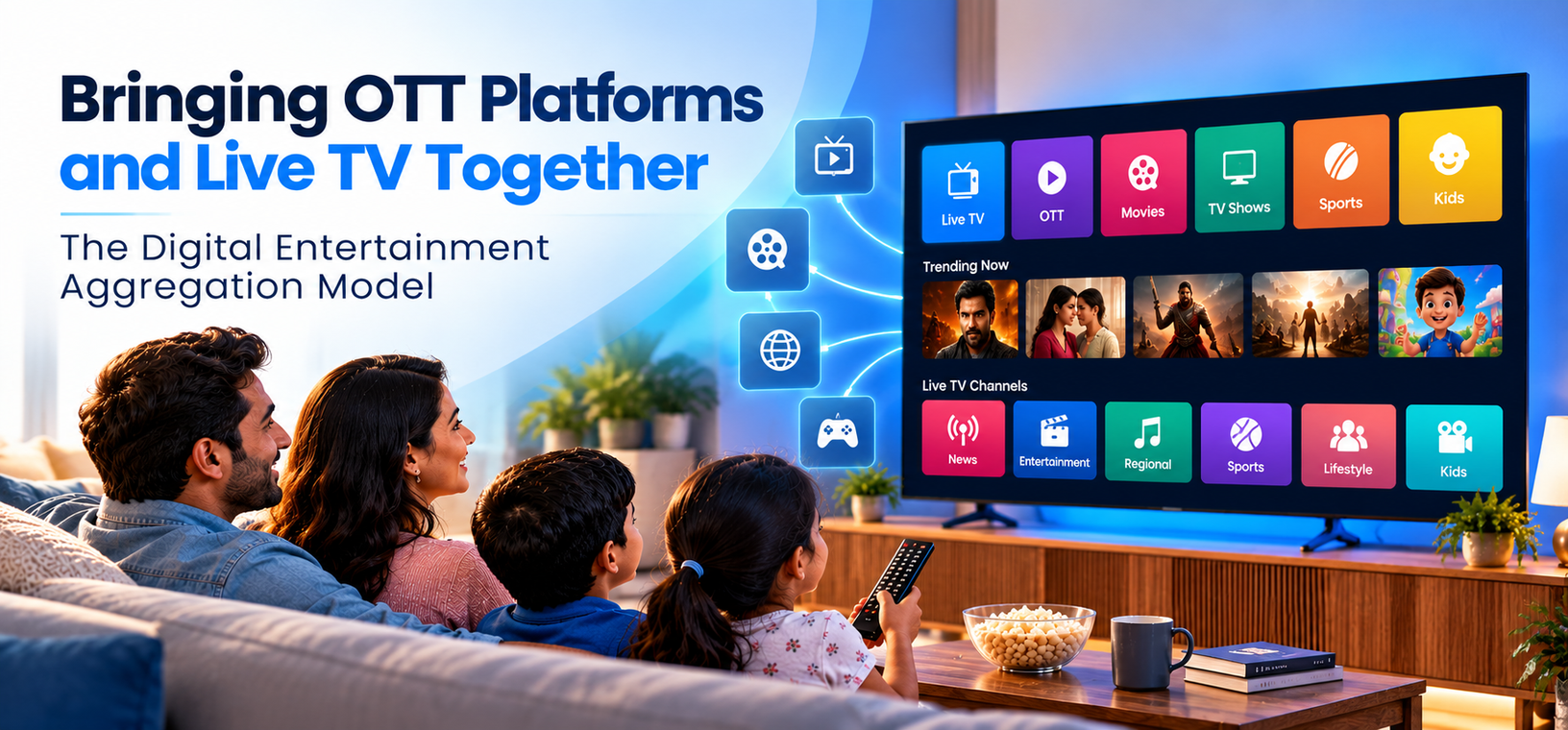
Discover how digital entertainment aggregation brings OTT platforms and live TV together in a more organised viewing experience. Explore how aggregation works, why it matters to Indian households, and how content availability, subscription clarity and convenience influence entertainment choices.
Bringing OTT Platforms and Live TV Together: The Digital Entertainment Aggregation Model
Introduction
India's entertainment industry has evolved as viewers increasingly access content through television channels, streaming applications and connected devices. Traditional television remains important for scheduled programmes, regional entertainment, news and live sports, while OTT platforms provide access to movies, web series and on-demand content.
Managing these different entertainment options can sometimes be confusing. Viewers may need to understand separate applications, subscription plans, account requirements and device compatibility before accessing their preferred programmes.
Digital entertainment aggregation offers an approach to organising these choices through a common platform, interface or subscription arrangement. Depending on the provider, it can bring supported live television and OTT services into a broader entertainment experience.
Understanding this model helps viewers evaluate what an aggregation platform actually offers, how its services work together and whether the available entertainment matches their household's needs.
Understanding the Digital Entertainment Aggregation Model
Digital entertainment aggregation brings multiple entertainment services or content categories together within a broader viewing experience. Depending on the platform, these may include live television channels, OTT applications, movies and other forms of digital entertainment.
The term can describe different service arrangements. Some platforms help viewers discover content across multiple services, while others offer selected services through a combined subscription package or provide a common access point for partner applications.
These arrangements are not necessarily identical. A content discovery platform may help users find programmes without including the subscriptions themselves. A bundled entertainment package, on the other hand, may include access to selected services under specific subscription conditions.
For customers, understanding this difference is important. The presence of an OTT service's name or logo does not automatically mean that every programme is included or that a separate subscription will not be required.
The central purpose of aggregation is to organise access to different entertainment options and make the available services easier to understand and navigate.
How Live TV and OTT Platforms Complement Each Other
Live television and OTT streaming serve different viewing preferences. Both are important parts of the entertainment ecosystem, but they offer different ways to discover and watch content.
Live television is commonly used for scheduled programmes, news broadcasts, regional channels, entertainment serials and live sports. Many viewers appreciate the familiar channel-based experience because they can select a channel and watch its current broadcast.
OTT platforms generally offer internet-based access to movies, web series and other digital content. Depending on the service, viewers can choose particular programmes according to their interests and viewing schedules.
These formats can complement each other within the same household. One family member may prefer daily television serials, another may enjoy movies, and others may follow sports or regional entertainment.
An aggregation platform can bring these viewing options together when the relevant services are supported. However, the actual experience depends on the included channels, OTT applications, playback arrangements and subscription conditions.
How Does an OTT Aggregation Platform Work?
An aggregation platform combines different elements to organise access to supported entertainment services. The exact process varies according to its technology, service agreements and business model.
Service integration: The provider establishes the arrangements required to offer selected entertainment services. These arrangements may involve technical integration, content distribution agreements or partnerships with service providers.
Content organisation: Entertainment may be grouped into categories such as live television, movies, regional programmes and sports. Clear categories help users understand what is available and find relevant content.
Subscription packaging: Some platforms offer multiple services under a combined package. Other platforms provide a shared interface but require separate subscriptions or accounts for certain services.
Content access: Depending on the integration, a programme may play within the main platform or open through another application. Customers should understand how access works before subscribing.
Device compatibility: The platform may support selected smartphones, tablets, smart TVs or streaming devices. Availability can depend on the operating system, application version, device specifications and plan restrictions.
These elements influence the overall viewing experience. Bringing services together is useful only when customers can understand the offering and access its included features without unnecessary confusion.
Why Content Discovery and User Experience Matter
Content discovery is an important part of digital entertainment aggregation. When a platform offers different entertainment categories, viewers need an organised way to identify available services and find what they want to watch.
A confusing interface can make content difficult to locate, even when a service offers a broad selection. Unclear labels, inconsistent menus and complicated navigation can create difficulties for people who are unfamiliar with digital applications.
A well-organised interface can make the experience more accessible by presenting services through understandable categories and familiar navigation patterns. For example, separating live television channels from movie applications can help users identify the type of entertainment they want.
Device-specific design is equally important. Smartphone users generally navigate through touch controls, while television viewers may use a remote control and need clearly visible menus and selection options.
In India, regional-language preferences also influence content discovery. Viewers may want to find Telugu, Tamil, Kannada, Malayalam, Hindi or other language content without having to search through unrelated categories.
A good aggregation experience should therefore focus on clear navigation, relevant content organisation and accessibility across supported devices.
Benefits of Bringing Entertainment Services Together
One potential benefit of aggregation is convenience. A common interface or combined package can help viewers explore different supported entertainment services through a more organised experience.
Aggregation may also help customers compare their entertainment options. By reviewing the included services, subscription duration and price, users can assess whether a package matches their viewing habits.
For families with different preferences, a combined offering may accommodate several entertainment interests. One person may prefer news, another may watch serials, and another may choose movies or web series.
Access across multiple devices can provide additional flexibility where supported. However, customers should check device registration limits, simultaneous streaming rules and compatibility requirements before making a purchase.
Aggregation does not automatically guarantee lower costs or better value. A package is useful when the included services are relevant, the subscription conditions are clear and the total price makes sense for the household.
OTT Aggregation in the Indian Market
India's entertainment market includes diverse languages, viewing habits and regional preferences. Many households combine traditional television with digital streaming, while their choice of content depends on interests, location and available services.
Regional entertainment is particularly important for audiences who follow local television serials, films, news and cultural programming. At the same time, viewers may also want access to national entertainment, sports and international content.
Aggregation platforms can organise these different options into a broader entertainment experience. However, the usefulness of a package depends on whether its actual channels and applications meet the needs of its intended audience.
Affordability and transparency are also important. Customers should be able to understand the subscription price, validity period, included services and any additional charges before purchasing a package.
For providers, understanding local audiences and presenting relevant entertainment options clearly can help make digital services easier to evaluate and use.
What Should Customers Check Before Choosing an Aggregator?
Before subscribing to an entertainment aggregation platform, customers should review several practical considerations.
Included services: Confirm which live television channels and OTT applications are available in the selected package.
Subscription price: Check the total cost, validity period, renewal conditions and additional charges.
Device compatibility: Verify that the platform supports the devices you intend to use.
Access requirements: Check whether each service works within the main application or requires another application or account.
Streaming conditions: Consider internet connectivity, supported resolution and simultaneous viewing restrictions.
Content availability: Remember that programmes and services may vary according to licensing agreements and provider decisions.
Customer support: Review the available support options for activation, subscription questions and technical issues.
These checks help customers make informed decisions instead of relying only on promotional claims or the number of services advertised.
Looking Ahead: The Future of Entertainment Aggregation
As viewing habits continue to evolve, aggregation platforms have opportunities to improve content discovery, navigation and subscription transparency. Viewers benefit when they can easily understand which services are available and how to access them.
Regional-language discovery, accessible interfaces and compatibility with supported devices may remain important considerations for Indian audiences. Clear package comparisons can also help customers select entertainment services according to their preferences and budgets.
At the same time, providers must work within licensing agreements, technical requirements and service-specific restrictions. Bringing services together through one interface does not remove the conditions that apply to individual OTT platforms.
The long-term value of aggregation will depend on the balance between relevant content, convenient access, transparent pricing and a user-friendly experience.
Final Thoughts
Digital entertainment aggregation reflects the changing needs of viewers who want access to live television and OTT entertainment through a more organised experience. For Indian households, the value lies in finding relevant content, understanding subscription options and accessing supported services conveniently. As the entertainment industry continues to evolve, platforms must focus on clear communication, transparent subscription details and a user-friendly experience. These elements help customers understand what they are choosing and whether a service meets their viewing needs.
Ultimately, a successful aggregation model should make entertainment easier to navigate without creating confusion about subscriptions, content availability or access requirements. A focus on customer needs, relevant content and transparency can help viewers make better-informed entertainment choices.
Explore Our Plans