
From VCV to BCN Digital: The Evolution of a Regional Cable Television Business
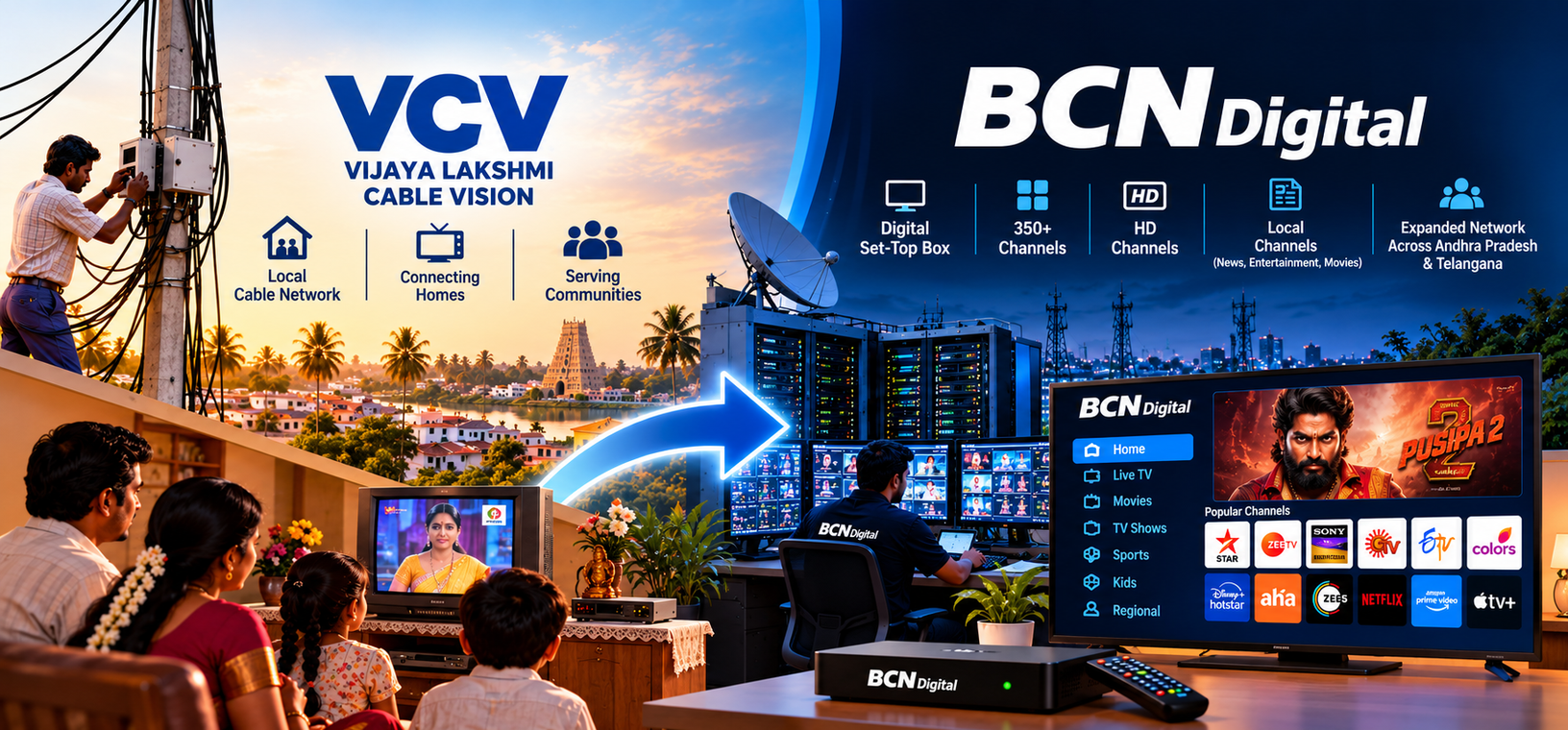
Explore the evolution of regional cable television through the VCV and BCN Digital milestones, from traditional cable distribution to digital set-top boxes, expanded channel choices and a broader television service model in Andhra Pradesh and Telangana
From VCV to BCN Digital: The Evolution of a Regional Cable Television Business
Introduction
The evolution of cable television in India reflects how regional businesses adapted to changing technology, customer expectations and entertainment habits. In towns such as Bhimavaram, cable networks played an important role in bringing television programmes into homes and connecting viewers with a growing range of channels.
The VCV and BCN Digital milestones form part of this wider company journey. The transition towards digital television represented more than a technology upgrade. It also required changes in distribution infrastructure, equipment, channel delivery and the way television services were managed.
Understanding the VCV and BCN Digital Milestones
The company's published history identifies Vijaya Lakshmi Vision (VCV) as an important milestone in its cable television journey. According to NELEN's official history, VCV began with 100 connections and 15 channels in 1991. By 2001, the company reported 30,000 completed connections and more than 250 channels. Source: NELEN's official history
The BCN Digital story is documented through The Bhimavaram Community Network. Its official website states that M. R. Gopala Raju established the network in 1991 as a proprietorship to provide cable signals to operators in Bhimavaram. The network subsequently expanded into nearby villages and towns. Source: BCN Digital's official history
These milestones illustrate the development of a regional cable television business over time. However, the available company pages describe VCV and The Bhimavaram Community Network in separate timeline entries. They should not automatically be interpreted as proof of a formal legal name change from VCV to BCN Digital.
Why Regional Cable Businesses Needed to Evolve
Cable television businesses operated in an environment where viewer expectations and technical requirements continued to change. A service model that initially focused on delivering television signals had to respond to a growing demand for more channels, improved picture quality and greater control over viewing options.
Several developments influenced this evolution:
More channel choices: Viewers increasingly expected access to different genres, including entertainment, movies, news, music and sports.
Better picture and sound: Digital technology created opportunities to offer improved viewing quality and high-definition channels.
Changing customer expectations: Households wanted a dependable television service, convenient channel selection and access to relevant local programming.
Growing operational requirements: A larger network needed stronger technical systems, equipment management and coordination with local cable operators.
For regional operators and distributors, adapting to these changes was essential to maintaining a useful service for customers.
The Shift from Traditional Cable Distribution to Digital Television
Traditional cable television relied on distributing television signals through a network to connected households. As digital technology became more widely adopted, cable businesses began upgrading the way they delivered and managed television services.
Digital cable television introduced a more advanced distribution model. Digital set-top boxes enabled compatible televisions to receive and decode digital signals, making it possible for service providers to organise channel packages and deliver additional features.
For customers, the benefits could include clearer picture and sound, access to a broader selection of channels and the availability of HD programming where supported by the service and equipment.
For the business, digital distribution required investment in suitable infrastructure, transmission equipment, signal processing and customer-premises devices. It also created new responsibilities around installation, equipment compatibility and technical support.
This transition was therefore not simply about replacing older equipment. It involved building the systems needed to deliver a more capable television service.
BCN Digital and the Role of Digital Set-Top Boxes
NELEN's published company timeline identifies 2014 as a milestone for BCN Digital, highlighting the introduction of a set-top box offering with more than 350 channels. BCN Digital's official history separately states that the business entered a partnership on 12 March 2014 to expand its activities beyond the Bhimavaram area. It also records that a digital licence was obtained from the Ministry of Information and Broadcasting in October 2015. Sources: NELEN and BCN Digital
These developments reflect the operational changes involved in moving towards a digital television model.
A digital set-top box serves as the interface between the cable service and a compatible television. It receives the delivered digital signal and makes the available channels accessible to viewers. Depending on the service and device, digital systems can also support features such as HD channels and video on demand.
For a cable distribution business, deploying this technology involves more than supplying a device. Customers need appropriate installation, signal compatibility, channel configuration and support when technical problems occur.
The move towards digital delivery also makes coordination between the central distribution network and local operators important. Equipment and systems must work together to provide a consistent service across connected households.
Building a More Structured Television Service
As cable businesses expand, the requirements of service delivery become more complex. A small operation can often manage customer requests through direct local coordination. A larger network needs clearer processes for signal distribution, installations, service complaints, equipment maintenance and communication with local operators.
Digital television adds further operational requirements. Providers must manage channel availability, set-top box deployment, technical compatibility and changes to service packages. They also need to respond when a customer experiences signal problems or equipment issues.
A structured operating model helps connect these responsibilities. Central teams can focus on distribution systems and service management, while local operators support customer-facing activities such as connections, installations and troubleshooting.
The effectiveness of this model depends on coordination, technical capability and timely support. Technology can improve service delivery, but the customer experience still depends on how well the complete network operates.
Local Content Remains Important
Digital technology changes how television signals are delivered, but it does not remove the value of regional programming. Local news, community events and programmes in familiar languages remain relevant to audiences who want content connected to their everyday lives.
BCN Digital's official website describes local channels carrying news, events and programmes alongside its wider channel offering. This illustrates how regional television services can combine broader entertainment choices with content relevant to local communities. Source: BCN Digital
Local programming can help a regional network maintain a distinct identity. National channels may offer popular entertainment and major events, while regional channels can cover nearby developments and community interests that larger broadcasters may not prioritise.
For cable businesses operating across different towns and districts, understanding local viewing preferences can be as important as maintaining the underlying distribution infrastructure.
From Cable Television Towards Connected Entertainment
The wider entertainment industry continues to evolve beyond conventional television distribution. Viewers now access entertainment through smart televisions, mobile devices, internet-based streaming services and applications.
This creates new opportunities for businesses with experience in television distribution and customer service. However, internet-based entertainment has different technical requirements from traditional cable television. It depends on broadband connectivity, compatible devices, software platforms, content rights and reliable digital services.
NELEN represents a further milestone in the company's published journey. Its official history describes the platform as a development shaped by collaboration with technology companies, bringing OTT aggregation and live television into a connected entertainment offering. Source: NELEN's official history This development reflects a broader industry shift: entertainment businesses increasingly need to consider not only how content reaches a television, but also how customers discover and access content across different devices.
Cable television experience can provide a foundation in distribution, customer relationships and service operations. Moving into internet-based services, however, requires additional capabilities in software, connectivity and digital product management.
What This Evolution Means for the Regional Cable Industry
The VCV and BCN Digital milestones help illustrate how regional cable television businesses can respond to changes in the market. Their relevance lies not only in the number of connections or channels reported at different stages, but also in the operational changes required to serve customers as technology develops.
The broader lessons include:
Adapt technology to customer needs: Upgrades should improve practical aspects of the viewing experience.
Build dependable operations: Equipment, signal delivery, installation and support need to work together.
Maintain local relevance: Regional content and knowledge of customer preferences remain valuable.
Prepare for new delivery models: Internet-based entertainment introduces opportunities alongside new technical and operational demands.
Treat evolution as an ongoing process: A successful service model needs to respond to changes in technology and viewing habits.
These principles are relevant to cable operators and distribution businesses across India as television and internet-based entertainment increasingly coexist.
Final Thoughts
The journey from traditional cable television towards digital distribution reflects the continuing evolution of regional entertainment services. The VCV and BCN Digital milestones provide context for understanding this change, including the growing importance of digital set-top boxes, channel choice, technical infrastructure and organised service delivery.
The next stage of the story is not limited to television technology. It also involves the reach of the distribution network, the role of local cable operators and the expansion of services into more locations. Understanding those elements provides a clearer picture of how a regional cable business develops and prepares for the changing entertainment landscape.
Explore Our Plans