
From 100 Connections to 30,000: The Growth Journey of Vijaya Lakshmi Cable Vision
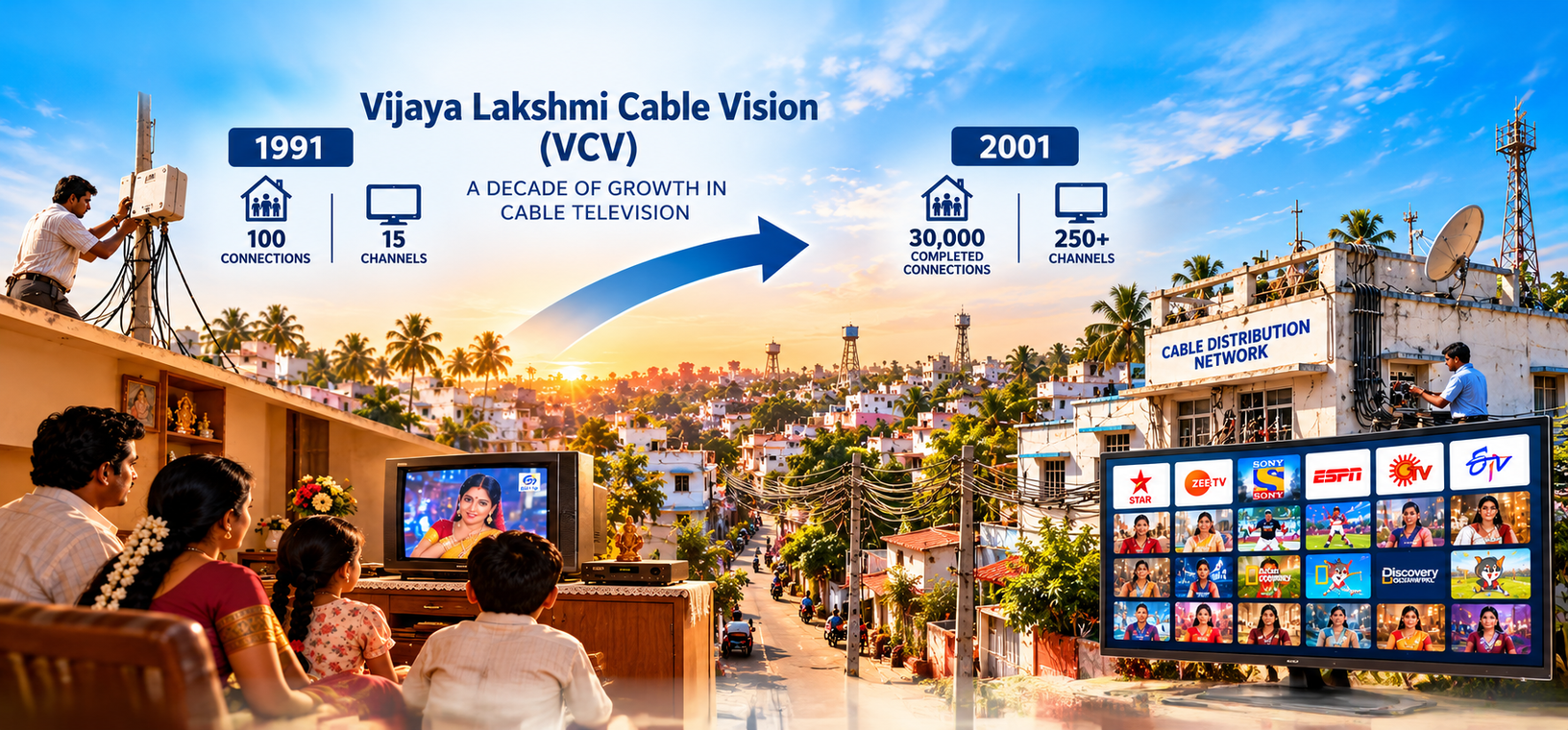
Discover the growth journey of Vijaya Lakshmi Cable Vision (VCV), which began in Bhimavaram, Andhra Pradesh, in 1991. From 100 connections and 15 channels to a reported 30,000 connections and more than 250 channels by 2001, explore the milestones that shaped VCV's development in the regional cable television industry.
From a Small Beginning to a Growing Cable TV Network
The growth of a cable television business involves more than connecting households to television channels. It requires a distribution network, reliable service operations and the ability to support customers as the business expands.
Vijaya Lakshmi Cable Vision (VCV) began its journey in Bhimavaram, Andhra Pradesh, in 1991. According to the company's published history, it started with 100 connections and 15 channels, establishing the foundation for its development in the cable television industry.
By 2001, VCV reportedly had 30,000 completed connections and more than 250 channels. These milestones provide a clear starting point for understanding the scale of its growth over the first decade.
From 100 Connections to 30,000 Connections
VCV's reported increase from 100 connections in 1991 to 30,000 completed connections by 2001 represents a substantial expansion in its network.
Every additional connection brings operational responsibilities. Cable operators must consider installation, distribution infrastructure, maintenance and customer support while ensuring that existing subscribers continue to receive their service.
The increase in connections provides a useful measure of VCV's reported growth. However, the figures alone do not establish exactly which business strategies, investments or market conditions contributed to the expansion.
Understanding the milestone in this context allows readers to appreciate the scale of the reported development without making unsupported assumptions about the company's internal operations.
Expanding from 15 Channels to More Than 250
A cable television network's growth can also be measured by the range of channels it provides. A wider selection can give subscribers access to more entertainment, news, films and other programming, depending on the available channel lineup.
VCV's published history records 15 channels at the beginning of its journey and more than 250 channels by 2001. This reported increase highlights a significant change in the breadth of its television offering.
Providing more channels requires the technical ability to distribute additional services and manage the infrastructure supporting them. The viewing experience also depends on factors such as signal quality, channel availability and network maintenance.
The growth in channel count therefore adds another dimension to the story of VCV's development. It shows how the reported expansion involved both the number of connected households and the range of television services available to them.
How Cable Television Changed the Viewing Experience
During the 1990s, cable television helped change how Indian households accessed entertainment. Instead of relying only on conventional television broadcasting, viewers could receive multiple channels through a local cable network.
This created more opportunities to watch different programmes and explore a broader selection of television content. For families, the availability of multiple channels added variety to everyday viewing.
Local cable operators played an important role in delivering these services. They connected households to distribution infrastructure and managed the practical work required to keep television services running.
VCV's growth took place during this wider period of change in Indian television. Although specific customer preferences behind its expansion require further historical evidence, the broader development of multi-channel television provides useful context for its journey.
The Role of Network Infrastructure in Cable TV Growth
A growing subscriber base requires an operator to manage its network carefully. Infrastructure must support the distribution of television signals while accommodating additional connections.
Several operational areas are important when a cable network expands:
Distribution infrastructure: The network must deliver television signals to connected households.
New installations: Additional subscribers require suitable connections and installation work.
Service maintenance: Equipment and network components need attention to maintain service continuity.
Channel management: Operators must support the channel offerings available to subscribers.
Customer support: Service requests and connection problems need to be handled effectively.
These are general requirements of the cable television industry, not a verified account of VCV's specific operating procedures during the 1990s.
They illustrate why network expansion involves more than increasing subscriber numbers. An operator must also maintain the infrastructure and service processes that support the growing network.
Why Customer Connectivity Matters
A cable television connection represents the relationship between a distribution network and the household using its service. As the number of connections increases, operators must continue to manage installation quality, service requests and network performance.
For regional cable businesses, local service operations can be an important part of the customer experience. Subscribers expect their connections to work, their channels to remain available and service issues to receive attention.
These requirements become increasingly relevant as a network grows. Maintaining a consistent service experience across a larger customer base requires appropriate coordination between infrastructure, technical operations and customer support.
VCV's reported growth to 30,000 connections by 2001 provides a milestone for understanding the scale of its network at that time. Further company records would be needed to establish precisely how its service operations developed alongside that growth.
##Understanding VCV's 2001 Milestone
The company's reported figures for 2001 highlight two important developments: 30,000 completed connections and more than 250 channels. The connection figure indicates the reported scale of the network, while the channel figure reflects the breadth of its television offering. Together, they provide a more complete picture of the company's development than either number would on its own.
These figures should be understood as company-reported historical milestones. They do not independently establish market share, revenue, profitability or VCV's position relative to every other cable television operator in the region.
Clear historical reporting matters because it helps readers distinguish documented company information from assumptions about the reasons behind business growth.
The Continuing Importance of Regional Cable TV
Regional cable television businesses have operated within an industry that continues to change. Digital distribution, direct-to-home services, connected televisions and OTT applications have introduced different ways for audiences to access entertainment.
Despite these changes, several operational principles remain relevant to television distribution: service reliability, effective infrastructure, content availability and customer support.
VCV's early growth provides historical context for understanding the development of a regional cable television network. It also illustrates why subscriber connections and channel availability are useful indicators when examining a cable business's reported expansion.
The company's story during this period can be understood on its own terms, without assuming that every later development in the entertainment industry was part of its original growth strategy.
What VCV's Growth Journey Tells Us
VCV's reported progression from 100 connections and 15 channels in 1991 to 30,000 connections and more than 250 channels by 2001 marks a significant milestone in its published company history.
The figures demonstrate the reported expansion of both its subscriber network and television offering during its first decade. They also provide a basis for examining the practical requirements associated with growing a cable television business.
Although the available figures do not explain every decision behind the expansion, they establish a clear timeline for the company's development in Bhimavaram.
Final Thoughts
The growth journey of Vijaya Lakshmi Cable Vision reflects an important period in the development of regional cable television in India. Beginning with 100 connections and 15 channels, VCV reportedly reached 30,000 completed connections and more than 250 channels by 2001. These milestones provide a foundation for understanding the development of its cable television network and the changing environment in which regional operators worked.
Explore Our Plans