
Vijayalakshmi Cable Vision: How VCV Began Its Cable TV Journey in 1991
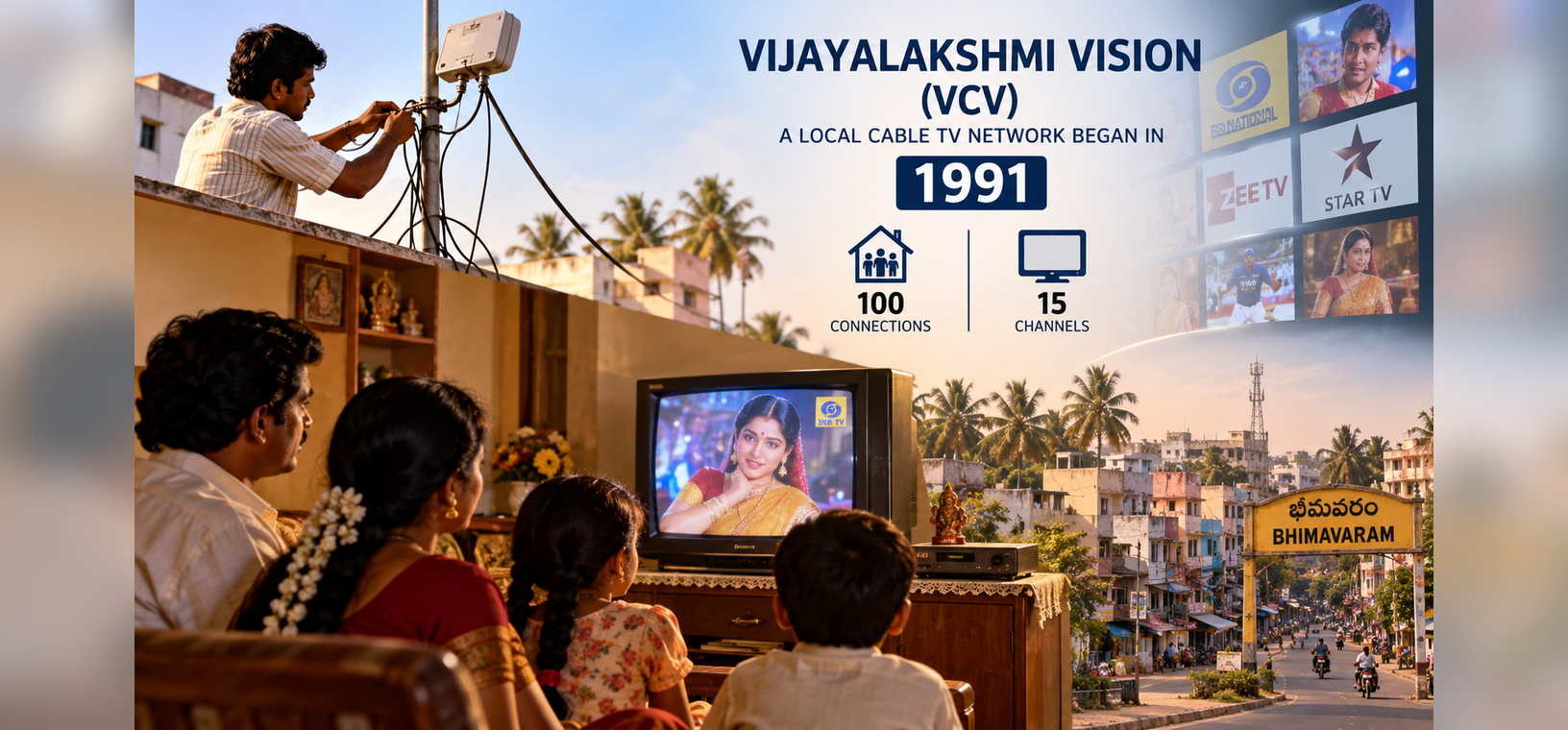
Discover the beginnings of Vijaya Lakshmi Cable Vision (VCV) in Bhimavaram, Andhra Pradesh, in 1991. Starting with 100 connections and 15 channels, VCV's early history reflects the development of local cable television and the foundations of a business that evolved alongside India's changing entertainment industry.
Vijayalakshmi Vision: How a Local Cable TV Network Began in 1991
The Beginning of Vijayalakshmi Vision
Before OTT platforms, smart TVs and internet-based streaming became part of everyday life, cable television played an important role in bringing entertainment into Indian households. It gave viewers access to a wider selection of television channels, including movies, news, serials and other programmes.
In 1991, Vijayalakshmi Vision (VCV) began its cable television journey in Bhimavaram, Andhra Pradesh. According to the company's published history, it started with 100 connections and 15 channels, marking the beginning of a business journey in regional television distribution.
At the time, cable television was developing across India, creating opportunities for local operators to connect households with an expanding range of entertainment. VCV's beginnings provide a starting point for understanding how a local cable TV operation can evolve alongside changes in technology and viewing habits.
Understanding the Cable TV Industry in the Early 1990s
Television entertainment in India looked very different in the early 1990s. Households had fewer viewing options than they do today, and access to multiple television channels depended on the broadcasting and distribution services available in their area.
Cable television introduced a new way to deliver channels to subscribers. Instead of depending entirely on conventional television reception, households could receive multiple channels through a cable distribution network.
For viewers, this created opportunities to enjoy more programmes and explore different types of content. For operators, it opened up a business model built around connecting households, maintaining infrastructure and delivering television services.
However, running a cable network required more than making channels available. Operators needed to organise installations, maintain signal distribution, address technical problems and respond to customer requirements.
These responsibilities made local knowledge and reliable service important parts of the cable television business.
Starting With 100 Connections and 15 Channels
According to VCV's published company history, the network began with 100 connections and 15 channels in 1991. These initial figures provide a useful reference point for understanding the scale of its early operations.
Every connection represented a household that needed access to the network. Establishing and maintaining those connections required infrastructure, installation work and ongoing attention to service quality.
The initial 15-channel offering also reflected the content available through the network at that stage. Although today's viewers can access hundreds of television channels and numerous streaming services, a smaller channel selection was part of the early cable television environment.
As a cable business develops, two important measures of progress are the number of households it serves and the range of content it can deliver. VCV's early figures establish the baseline for examining these aspects of its subsequent growth.
Why Local Cable Networks Mattered to Indian Households
Local cable operators played an important role in the development of television distribution across many Indian towns and neighbourhoods. They helped bring cable services closer to households and managed the practical work required to establish and maintain connections.
Customers depended on operators for installation, service support and assistance when television signals were interrupted. This local relationship was an important part of the service experience.
Regional preferences also influenced television viewing. Audiences wanted access to news, movies, entertainment programmes and content relevant to their language and interests.
For businesses operating in regional markets, understanding these requirements could help them respond to customer expectations. Building a sustainable cable network therefore involved both technical infrastructure and an understanding of the people using the service.
VCV's beginnings in Bhimavaram place its story within this broader development of regional television distribution in India.
The Challenges of Building a Cable Television Network
Establishing a cable TV service involves several operational responsibilities. These requirements become more demanding as the number of subscribers and the size of the distribution network increase.
Key considerations for a cable television business include:
Network infrastructure: Building and maintaining the connections needed to deliver television signals.
Installation and maintenance: Ensuring that household connections are installed correctly and technical issues are addressed.
Channel availability: Managing the selection of channels offered to subscribers.
Customer support: Responding to service requests and helping customers resolve problems.
Business growth: Expanding the network while maintaining service quality and operational efficiency.
These are general considerations for cable television operators, not a verified account of specific challenges faced by VCV in 1991. They help explain the operating environment in which regional cable networks developed.
As television technology advanced, operators also needed to respond to changing distribution systems, increasing channel availability and evolving customer expectations.
How VCV's Early Journey Led to Further Growth
The beginning of a cable television business is only one part of its history. Understanding its development also requires examining how the business expanded its subscriber base, improved distribution capacity and responded to changes in the television industry.
VCV's published company history identifies 2001 as another significant milestone. By that year, the network had reportedly reached 30,000 connections and more than 250 channels.
Compared with the initial figures of 100 connections and 15 channels in 1991, this represents substantial growth over the following decade. The comparison demonstrates the change in the reported scale of the network and the wider selection of channels it offered.
These figures do not, by themselves, explain every decision or operational change behind that progress. However, they provide a documented basis for exploring how the business developed from its initial operations into a larger cable television network.
The next stage of the company journey involves the evolution towards BCN Digital and a broader distribution model. Examining that transition will help explain the relationship between regional cable operations, network expansion and the development of digital television services.
From Traditional Cable TV to Digital Entertainment
The entertainment industry has changed significantly since VCV began operating in 1991. Cable television helped expand channel access, while later developments introduced digital broadcasting, internet connectivity, connected televisions and OTT streaming applications.
Each development changed how viewers accessed entertainment. Traditional cable TV focused on delivering television channels through a distribution network, while internet-based services introduced new ways to watch content on different devices.
Today, Indian households may use live television, streaming platforms and connected devices according to their viewing preferences. Reliable connectivity, content availability, ease of use and affordability all influence the entertainment experience.
The evolution of businesses associated with cable television and digital entertainment can be understood against this wider industry background. VCV's early history provides the first chapter of that story, while subsequent milestones help connect traditional television distribution with newer forms of entertainment delivery.
Why VCV's History Matters Today
Understanding the history of a company helps put its later developments into context. VCV's reported starting point in 1991 provides a reference for examining how its operations changed over time.
Its initial 100 connections and 15 channels represent the early scale of the network. The reported figures for 2001 demonstrate how much the network's reach and channel offering had changed within a decade.
For readers interested in the Indian cable TV industry, this progression provides a useful starting point for understanding the development of regional television distribution. It also highlights the importance of examining company milestones alongside the broader technological and commercial changes affecting the industry.
VCV's story is the first part of a larger company evolution series covering cable television, digital distribution, broadband services and app-based entertainment.
Final Thoughts
Vijayalakshmi Vision began its cable television journey in Bhimavaram, Andhra Pradesh, in 1991, with 100 connections and 15 channels, according to the company's published history.
By 2001, the company reported reaching 30,000 connections and more than 250 channels. These milestones establish a starting point for understanding the network's development and the changing television landscape in which it operated.
The story begins with local cable television, but its significance extends to the wider evolution of India's entertainment industry.
In the next article, we will explore how VCV grew from its initial operations into a larger cable television network, examining the reported milestones that shaped its expansion.
Explore Our Plans