
Building a Local Cable TV Service: The Story of Vijaya Lakshmi Cable Vision
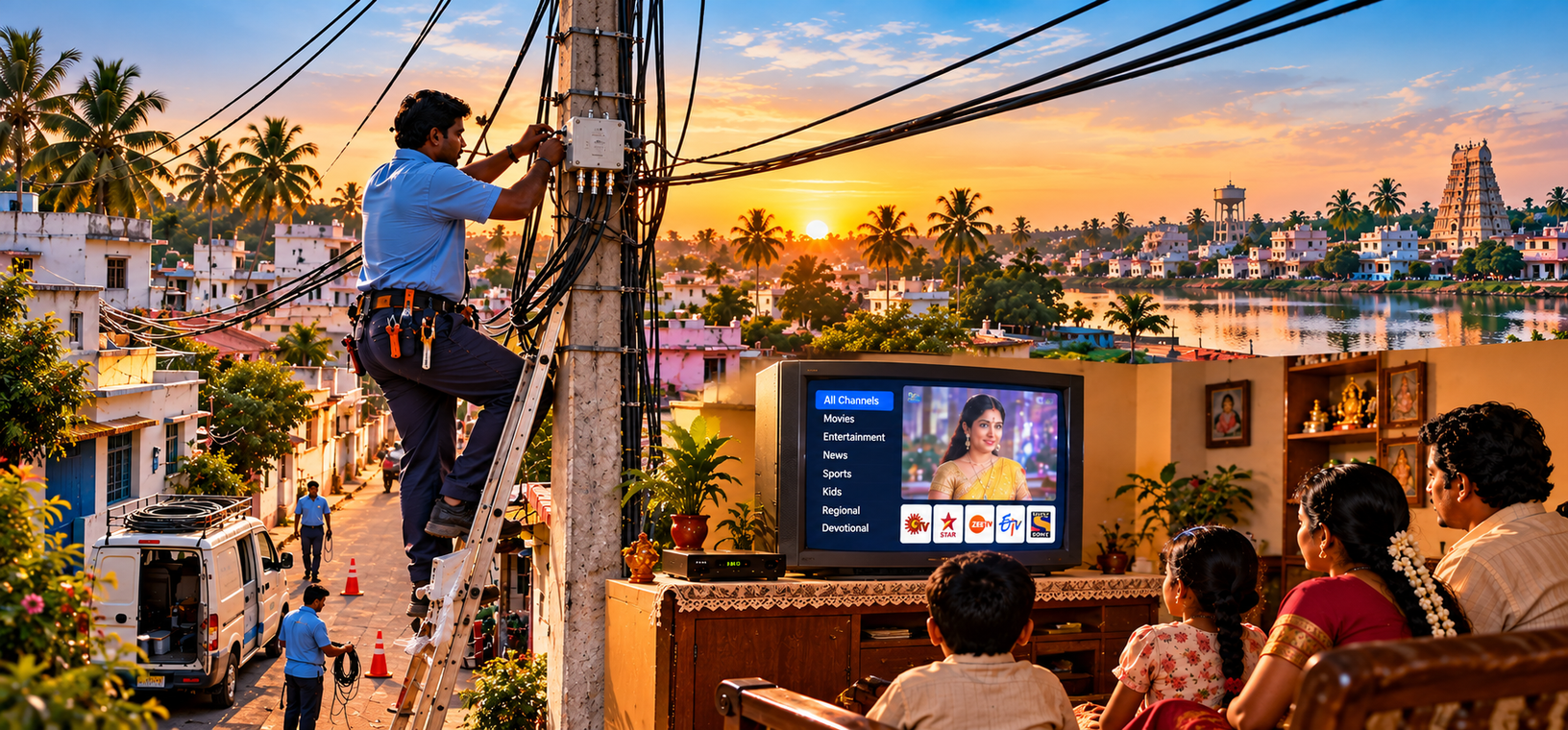
A cable television service involves more than delivering channels to a screen. Discover the local service environment, distribution requirements and customer expectations that shaped the cable TV industry, and understand the context behind Vijaya Lakshmi Cable Vision's journey in Bhimavaram, Andhra Pradesh.
Cable Television Was More Than a Channel Connection
For a household, cable television is a service that brings programmes to the television screen. Behind that experience, however, is a combination of distribution infrastructure, installation work, technical maintenance and customer support.
In India's traditional cable TV industry, the quality of the viewing experience depended not only on the channels available but also on the systems used to deliver them. A connection had to be installed, the signal needed to reach the household, and technical problems required attention when they occurred.
This local service environment provides a useful way to understand the cable television business in which Vijaya Lakshmi Cable Vision (VCV) developed. Based in Bhimavaram, Andhra Pradesh, VCV's history offers a starting point for examining the practical role of regional cable television services.
The Local Cable Operator's Role in Television Access
Cable television connects content distribution with the everyday needs of households. Unlike a television channel itself, a cable operator is concerned with making the available service accessible to subscribers within its operating area.
The work can involve establishing connections, maintaining distribution equipment and responding to customer complaints. The specific responsibilities depend on the network's technical setup and the way its operations are organised.
For subscribers, these activities often remain behind the scenes. They become noticeable when a connection stops working, a channel cannot be received or a technical issue interrupts viewing.
This relationship between infrastructure and customer experience is one of the defining features of the local cable television business. It explains why service delivery matters alongside channel selection.
What Happens Between the Television Network and the Home?
Delivering cable television involves several connected stages. Understanding these stages helps readers see why providing a working television service requires more than making channels available.
Signal distribution: Television signals must enter a distribution system that can carry the available channels towards the intended service area.
Local network connectivity: The distribution infrastructure must provide a suitable path for signals to reach connected households.
Household installation: A subscriber's television must be connected to the service using the appropriate equipment and wiring.
Signal checking: The connection needs to be checked to identify problems that could affect reception.
Ongoing maintenance: Network equipment, cables and household connections may require attention as the service continues.
These are general elements of traditional cable television delivery. The precise equipment, network design and installation methods used by VCV during its early years would need to be confirmed through company records before being described as part of its specific history.
Why Installation and Maintenance Matter
A cable TV service must work in the subscriber's home, not simply at the distribution point. Installation is therefore an important part of the service experience. Poor connections, damaged wiring or equipment faults can affect reception. Identifying the source of a problem may require checking the household connection, the local distribution path or other parts of the network.
Maintenance also becomes important as infrastructure ages and environmental conditions affect cables and equipment. Operators generally need a process for receiving complaints, identifying faults and arranging repairs.
For customers, effective maintenance can mean less disruption and a more dependable viewing experience. For service providers, it requires coordination between technical work, equipment management and communication with subscribers.
These principles help explain the operational environment of the cable TV industry in which regional businesses such as VCV developed.
Channel Availability Is Only One Part of the Service
A broad channel lineup can make a cable TV package attractive, but channel numbers alone do not describe the complete subscriber experience. Viewers also depend on channels being available through the service and receiving a usable signal. Technical problems can reduce the value of an otherwise extensive channel offering.
Cable operators therefore need to consider content distribution alongside the infrastructure that supports it. Channel selection, signal delivery and service maintenance are connected parts of the overall television experience.
For households, the goal is simple: access to the programmes included in their service without unnecessary difficulty. Achieving that experience requires the technical side of television distribution to function properly.
Understanding Customer Expectations in a Local Market
A local television service operates in a market where subscribers have different viewing preferences and service requirements. Some households may prioritise entertainment and movies, while others may place greater importance on news, regional programmes or general television viewing.
Cable TV operators need to communicate clearly about the services they provide and respond to problems that affect subscribers. Installation arrangements, service enquiries and fault reporting can all influence how customers experience the business.
These expectations are relevant across regional cable television markets. However, specific claims about VCV's customer service practices, subscriber preferences or historical satisfaction levels should be supported by evidence rather than assumed from general industry patterns.
VCV's connection with Bhimavaram gives its history a clear local setting. Understanding that setting helps place the business within the wider role regional cable networks played in providing television access to Indian households.
The Operational Challenges of Serving a Local Area
Providing cable television across a service area requires coordination between infrastructure and field operations. The larger or more complex a network becomes, the more important it can be to organise installations, maintenance and service requests effectively.
Common operational considerations include:
Coverage planning: Understanding which households and areas the network can serve.
Equipment management: Maintaining the components required to distribute television signals.
Fault resolution: Identifying problems and arranging appropriate technical work.
Subscriber communication: Giving customers clear information about installation and service issues.
Service continuity: Managing maintenance while aiming to minimise disruption to subscribers.
These points describe general operational considerations for cable TV providers. They are not claims that VCV followed a particular process or experienced a specific problem.
To document VCV's own operational development in greater detail, additional evidence would be useful, such as historical photographs, equipment records, installation documents, company interviews or accounts from people involved in its early operations.
Traditional Cable TV and the Changing Entertainment Experience
The television industry has changed significantly since the early 1990s. Digital broadcasting, satellite services, smart televisions and OTT applications have expanded the ways audiences can access content.
Traditional cable television delivers channels through a cable distribution network. OTT services deliver video over internet connections through compatible applications and devices, while internet protocol television (IPTV) uses internet protocol-based delivery systems.
Although these services can all provide television or video entertainment, their technical delivery models are different. Recognising those differences helps readers understand the wider development of the industry without treating every form of television distribution as the same technology.
VCV's history belongs to the regional cable television environment. Examining the practical requirements of that environment provides a clearer understanding of the service model in which the company began and developed.
Preserving the History of Vijaya Lakshmi Cable Vision
Company history becomes more useful when it combines verified milestones with reliable information about how the business operated. Dates and connection figures provide a timeline, while photographs, records and first-hand accounts can help explain the people, systems and decisions behind it.
For VCV, useful historical material could include photographs of early installations, details of its distribution equipment, accounts from technicians and information about how its service area developed. Such evidence would make it possible to tell a more specific story about the company's operations rather than relying only on general descriptions of the cable television industry.
It is important to distinguish between documented company facts and broader industry context. This approach protects the accuracy of the historical record and gives readers a clearer understanding of what is known about VCV.
Final Thoughts
The development of a local cable television service depends on the relationship between distribution infrastructure, household connectivity, channel availability and ongoing technical support. These elements help explain the work involved in delivering television beyond the screen and into people's homes.
Vijaya Lakshmi Cable Vision's history in Bhimavaram provides a local context for understanding this part of India's television industry. Exploring the practical requirements of cable TV services adds another perspective to the company's story, beyond its founding and reported growth milestones.
Explore Our Plans